





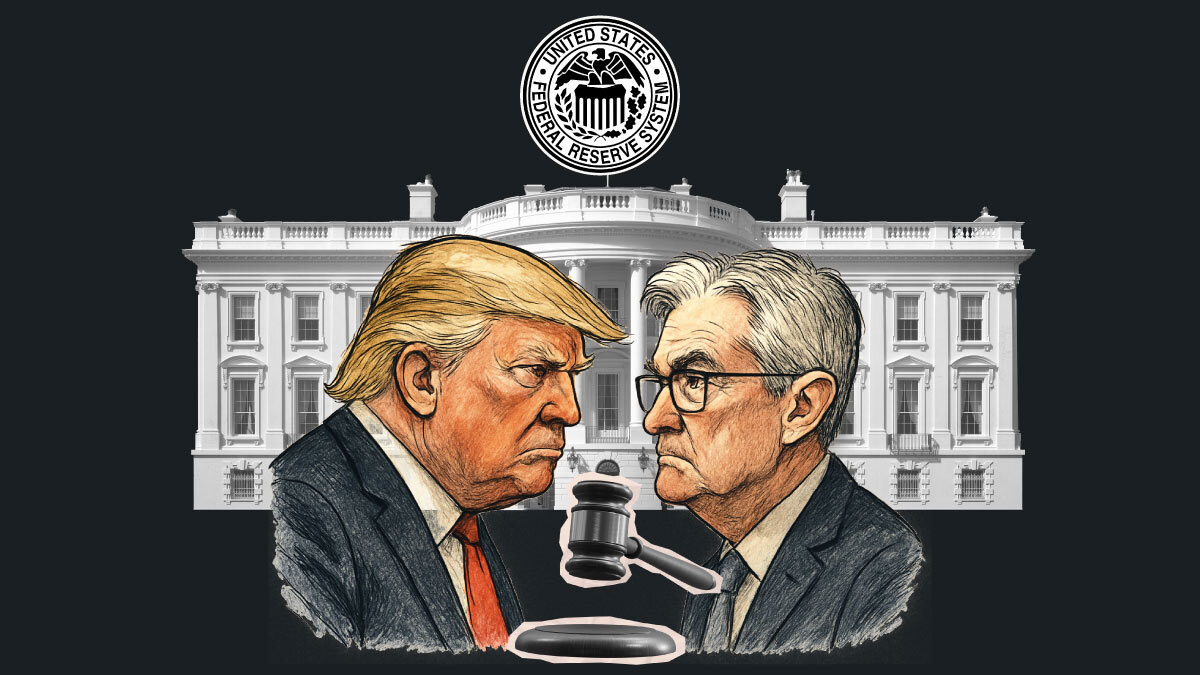
Federal Reserve Subpoena: Federal Judge Blocks DOJ Subpoenas
A federal judge on Friday blocked subpoenas that the U.S. Department of Justice (DOJ) served the Federal Reserve in a case involving Jerome Powell’s Congressional testimony on the central bank’s headquarters renovation.
The Federal Reserve was ordered to produce documents related to its headquarters renovation, which is worth $160 million. The renovations were conducted during Powell’s tenure as Chairman of the Federal Reserve from 2018 to 2022.
#Federal Reserve Subpoena: A Battle Over Documents
In a stunning move, federal judge Rudolph Contreras blocked the subpoenas issued by the DOJ, citing that the agency had not followed proper procedures in obtaining the documents. The Federal Reserve argued that it was entitled to resist producing certain documents related to the renovations.
Contreras’ ruling is significant because it highlights the growing tensions between the Federal Reserve and the DOJ over issues of oversight and transparency. Critics argue that the Federal Reserve’s headquarters renovation was a symbol of elitism, with costs that are out of touch with the average American.
#The Case Against the Federal Reserve
The case centers on a Congressional hearing in which Jerome Powell testified about the Federal Reserve’s decision to raise interest rates despite high inflation and economic uncertainty. The hearing raised questions about whether the Federal Reserve was acting in the public interest or simply catering to the interests of Wall Street.
At the center of the controversy is a report by the Government Accountability Office (GAO) that found significant costs savings could have been achieved through alternative design options for the headquarters renovation. However, the Federal Reserve maintained that it needed to maintain the current layout and aesthetics of its headquarters.
#Federal Reserve Subpoena: A New Era of Transparency?
The ruling is a victory for the Federal Reserve, which had argued that it was entitled to resist producing certain documents related to the renovations. The DOJ has indicated that it will appeal the decision, but Contreras’ ruling suggests that the Federal Reserve may have some protection against further subpoenas.
The case highlights the growing tensions between the Federal Reserve and the DOJ over issues of oversight and transparency. Critics argue that the Federal Reserve’s headquarters renovation was a symbol of elitism, with costs that are out of touch with the average American.
In recent years, there has been increasing scrutiny of the Federal Reserve’s decision-making process and its relationship with Wall Street. The case before Contreras is just one example of how these issues are playing out in the courts.
The Federal Reserve has long been criticized for its close ties to Wall Street, with many arguing that it prioritizes the interests of banks and other financial institutions over those of ordinary Americans. The headquarters renovation controversy is just one example of how this relationship can become contentious.
As the case before Contreras plays out, it remains to be seen whether the Federal Reserve will ultimately prevail in its efforts to resist production of certain documents related to the renovations. However, the ruling suggests that the agency may have some protection against further subpoenas.
The implications of the ruling are far-reaching, with potential consequences for the Federal Reserve’s relationship with Congress and the public at large. As one observer noted, “This case is a test of whether the Federal Reserve can resist accountability from the DOJ.”
Ultimately, the outcome of the case will depend on how it is received by lawmakers and the public. If the Federal Reserve prevails, it may embolden other institutions to resist oversight from the DOJ. Conversely, if the agency loses, it could mark a significant shift in the balance of power between the Federal Reserve and Congress.
For now, the Federal Reserve has emerged victorious, but the case is far from over. As one observer noted, “This is just the beginning.”
The implications of the ruling are far-reaching, with potential consequences for the Federal Reserve’s relationship with Congress and the public at large. As the case before Contreras continues to unfold, it remains to be seen whether the Federal Reserve will ultimately prevail in its efforts to resist production of certain documents related to the renovations.
One possible outcome is that the Federal Reserve may need to provide more detailed information about its decision-making process and budget allocation for the headquarters renovation. This could involve providing access to internal memos, emails, and other communications between senior officials, as well as details about the costs savings achieved through alternative design options.
The DOJ has indicated that it will appeal the decision, which could lead to a longer and more contentious battle over the documents at issue. However, Contreras’ ruling suggests that the Federal Reserve may have some protection against further subpoenas, at least for now. Related: Learn more about this topic.
The case before Contreras is just one example of how the growing tensions between the Federal Reserve and the DOJ are playing out in the courts. There are several other high-profile cases involving the Fed and the DOJ that could have significant implications for the institution’s relationship with Congress and the public.
For instance, there is ongoing litigation related to the Fed’s role in the 2008 financial crisis, which has led to charges of reckless endangerment and gross negligence. Additionally, the Federal Reserve has been subject to scrutiny over its handling of the cryptocurrency market, including allegations that it failed to disclose its involvement with private companies.
The headquarters renovation controversy is just one part of a larger narrative about the Federal Reserve’s priorities and accountability. Critics argue that the institution has become too cozy with Wall Street, and that its priorities are out of touch with the needs of ordinary Americans.
As the case before Contreras continues to unfold, it remains to be seen whether the Federal Reserve will ultimately prevail in its efforts to resist production of certain documents related to the renovations. However, the ruling suggests that the agency may have some protection against further subpoenas, at least for now.
The Federal Reserve has long been criticized for its close ties to Wall Street, with many arguing that it prioritizes the interests of banks and other financial institutions over those of ordinary Americans. The headquarters renovation controversy is just one example of how this relationship can become contentious.
In recent years, there has been increasing scrutiny of the Federal Reserve’s decision-making process and its relationship with Wall Street. The case before Contreras is just one example of how these issues are playing out in the courts.
The Federal Reserve has a long history of resisting oversight from Congress, dating back to the 1970s when it first became an independent agency. However, in recent years, there has been a growing trend towards greater transparency and accountability within the institution.
One possible outcome of the case before Contreras is that it could mark a significant shift in the balance of power between the Federal Reserve and Congress. If the agency prevails, it may embolden other institutions to resist oversight from the DOJ. Conversely, if the agency loses, it could lead to greater scrutiny and accountability from lawmakers.
Ultimately, the outcome of the case will depend on how it is received by lawmakers and the public. As one observer noted, “This case is a test of whether the Federal Reserve can resist accountability from the DOJ.” The implications of the ruling are far-reaching, with potential consequences for the Federal Reserve’s relationship with Congress and the public at large.
In the meantime, the Federal Reserve continues to operate behind closed doors, with many questions still unanswered about its decision-making process and priorities. As the case before Contreras plays out, it remains to be seen whether the institution will ultimately prevail in its efforts to resist production of certain documents related to the renovations.