




Clinical Simulation for Dynamic AI Evaluation Toolset
As the field of artificial intelligence continues to advance at a breakneck pace, the need for robust evaluation tools has become increasingly critical. One innovative approach that has gained significant attention in recent years is clinical simulation, which has the potential to revolutionize the way we assess and refine AI systems.
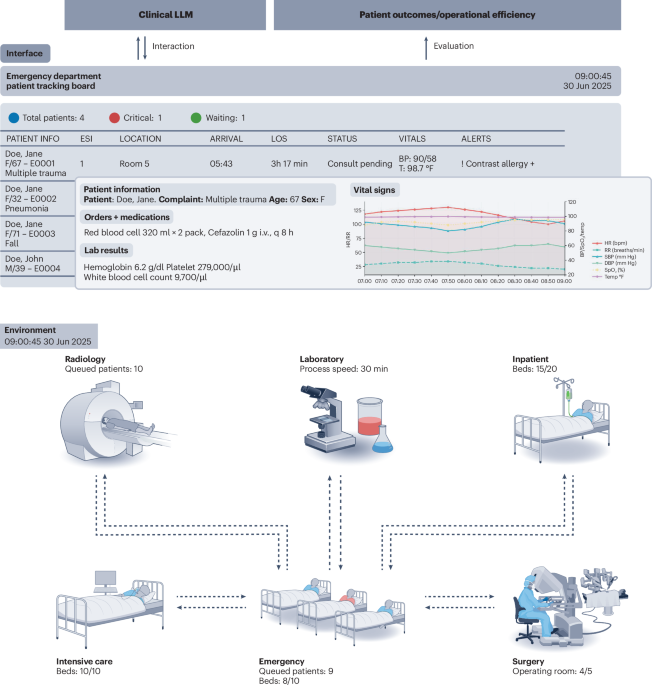
Clinical simulation involves creating highly realistic, simulated environments that mimic real-world scenarios, allowing developers to test and evaluate AI models in a controlled and repeatable manner. By leveraging advanced technologies such as virtual reality and machine learning, clinicians can design simulations that accurately replicate the complexities of human decision-making, behavior, and interactions.
Clinical Simulation: A Paradigm for Dynamic AI Evaluation
Traditional evaluation methods, such as manual review or benchmarking, often fall short in capturing the nuances of complex AI systems. These approaches may rely on simplistic metrics or fixed criteria, which can lead to incomplete or inaccurate assessments. In contrast, clinical simulation provides a dynamic and adaptive framework for evaluating AI models, enabling developers to capture the full range of possible scenarios and interactions.
One of the key benefits of clinical simulation is its ability to provide high-fidelity representations of real-world environments. By incorporating detailed knowledge of anatomy, physiology, and behavior, clinicians can design simulations that accurately reflect the complexities of human systems. This level of realism enables AI models to be thoroughly tested and validated, reducing the risk of adverse events or unintended consequences.
Applications of Clinical Simulation in AI Development
Clinical simulation has a wide range of applications across various fields, including healthcare, finance, and education. In healthcare, for example, clinical simulation can be used to train medical professionals on complex procedures, such as surgery or emergency response. By simulating real-world scenarios, clinicians can hone their skills and develop more effective treatment plans.
In the financial sector, clinical simulation can be employed to test and evaluate AI-driven trading algorithms. By simulating market fluctuations and economic trends, developers can refine their models and identify potential vulnerabilities. This approach can help mitigate risks and optimize investment strategies.
The Future of Clinical Simulation in AI Evaluation
As the field of AI continues to evolve, the importance of clinical simulation will only grow. With the increasing availability of advanced technologies, such as cloud computing and edge AI, clinicians can design simulations that are more sophisticated and dynamic than ever before.
Related: Learn more about this topic.
The integration of clinical simulation with other evaluation methods, such as human-centered design and participatory research, holds great promise for improving AI development. By combining these approaches, developers can create more comprehensive and inclusive evaluations, ensuring that AI systems meet the needs of diverse stakeholders.
Conclusion
Clinical simulation offers a powerful toolset for dynamic AI evaluation, enabling developers to test and refine complex models in highly realistic environments. As the field of AI continues to advance, the importance of clinical simulation will only grow. By embracing this innovative approach, clinicians and developers can create more effective, safe, and equitable AI systems that benefit society as a whole.
In the years ahead, we can expect to see significant advancements in clinical simulation technology, including the development of more sophisticated algorithms and increased availability of cloud-based platforms. As these innovations unfold, it is essential that clinicians, developers, and policymakers collaborate to ensure that clinical simulation remains at the forefront of AI evaluation.
Ultimately, the success of clinical simulation depends on its ability to adapt to changing needs and contexts. By staying agile and responsive to emerging challenges, we can unlock the full potential of this powerful toolset and create a brighter future for AI development.